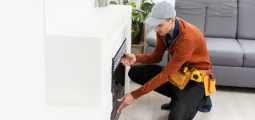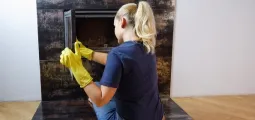
A few quick answers help us understand your home, so we can give you a clear, upfront quote for Creosote Removal Delta
A smoky smell on a humid afternoon, scratching above the damper, a fire that refuses to draw: chimneys tend to announce trouble in small ways first. If one of those moments led you to search for “creosote removal”, you are in a good place to start. This page walks through creosote removal for buildings around Delta, explaining what usually causes problems, what a visit involves and which simple checks you can make safely on your own.
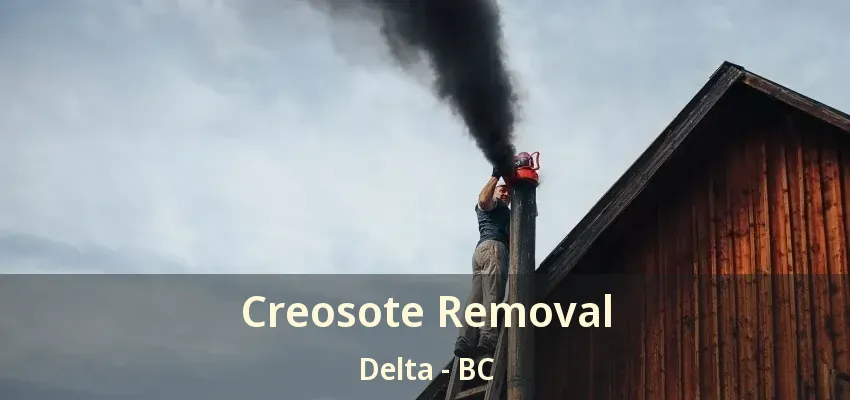
Soot is dry carbon and creosote is a tar-based wood smoke residue, and telling them apart helps us work out what is going on with the appliance. Soot wipes off on a fingertip and falls easily under a brush. When we find heavy soot in a flue serving a gas furnace, boiler or fireplace, we take it as a sign the burner may need attention from a qualified gas technician. Creosote, by contrast, tells us how the wood fires have been run: flaky deposits suggest reasonably hot burning, while sticky or glassy layers point to cool, smoky fires or firewood that was not dry enough.
Creosote is condensed wood smoke, and its flammability is the main reason chimney sweeping exists. Smoke carries unburned particles and vapor, and when it meets a cooler surface those compounds stick. We find the heaviest deposits where gases slow down or lose heat quickly: the smoke chamber just above the damper, the bends in a stovepipe and the upper section of chimneys built on an exterior wall. That residue is fuel sitting inside a passage built to carry fire, so a spark or an overloaded firebox can ignite it. That is why we gauge its thickness on every visit and explain what it means for you.
An unswept flue slowly narrows and fills with fuel for a chimney fire, and stopping that is the short version of why we sweep. On the job, the deposits we pull out range from light, dusty soot to crusty flakes and shiny, hardened tar. Each layer makes the next one easier to form, because a rough, narrowed flue cools smoke faster. A neglected chimney also hides its own damage, since nobody can see a cracked tile or a gap in the mortar through a thick coat of buildup. Clearing it is what lets us tell an owner in Delta whether the fireplace or stove is ready to use.
Smoke spills in when the draft is weaker than the push of the fire, and we usually trace it to one of a few causes. In tight, well-sealed houses, exhaust fans and dryers create enough suction that the chimney becomes an air intake instead of an exhaust. Short chimneys, nearby trees or a taller roofline beside the stack can disturb the airflow at the top. Inside the flue, heavy creosote, a nest or fallen debris narrows the path. Sometimes the fireplace opening is simply too large for the flue. Finding which one applies takes a look from both ends, and the fix ranges from a habit change to a repair.
Glazed creosote comes off with tools and time, since an ordinary brush glides over it like a broom on ice. We describe creosote in three stages: a loose, sooty layer that brushes away, a crunchy, flaky layer that needs stiffer heads, and a glossy third stage that clings to the liner like candy coating. For that last stage we use rotary heads with chains or cutting blades, spun on a drill and matched carefully to the liner so we do not damage it. Chemical modifiers help too, turning the glaze into a brittle crust we can sweep out later. Each method has limits, so we explain them first.
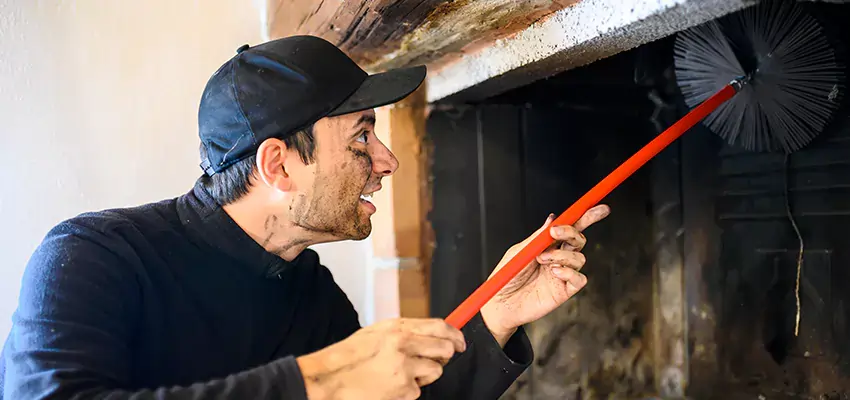
A chimney camera is worth using because it shows the full length of the flue, where cracks, gaps and hidden buildup sit far beyond the reach of a flashlight. From the bottom or top you can see only a few feet in; the camera travels the whole way on a flexible rod and records what it finds. It can reveal broken or shifted tiles, missing mortar between sections, damage from an old chimney fire, separated metal joints and obstructions partway up. Ask to see the footage or still images. They make a recommendation much easier to understand and to compare if you want a second opinion.
Yes, and for heavy wood users a mid-season cleaning is often a smart move. The fireplace or stove simply needs to be out and cool for the visit, so plan on skipping fires for a day beforehand. Many households that heat mainly with wood schedule one sweep before winter and another partway through, especially if they notice flakes falling or a weaker draft. There is no reason to keep burning on a dirty flue just because the season is under way. Ask about creosote removal availability early, since midwinter calendars can still be busy.
From the scheduling side, spring and summer give owners the most choice and give us time to handle repairs before the cold arrives. A flue swept right after the last fire of the season also smells better through the muggy months. The rush starts with the first chilly week of fall, and calendars around Delta fill quickly from there. For businesses with fireplaces or ovens, quieter stretches of their year are usually easier for access as well. We sweep in every season, though. The right time is whenever a problem shows up, and otherwise a fixed month you will remember each year.
Let them cool completely, then scoop them out along with the ashes into a metal container with a tight lid, and store it outdoors away from the house and anything that burns. Creosote is flammable, so never leave piles of it in the firebox or toss it into a compost bin or paper bag. Avoid household vacuums, which can clog or spread fine dust. A steady trickle of flakes is a sign the flue is shedding buildup and due for attention. Mention how much you have been finding when you book “creosote removal”, since it helps gauge the job.
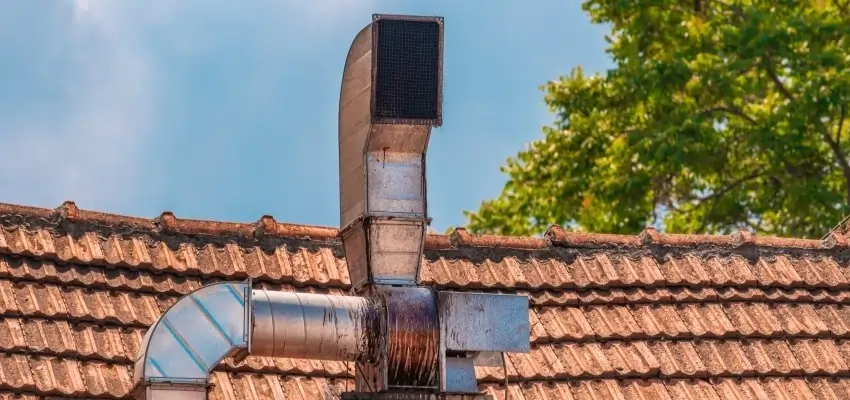
A storm, a heat wave or a long cold snap is a good moment to make sure everything at home still works the way it should. If anything about your chimney has changed since the weather turned, a quick check is a sensible next step. Arrange a visit in Delta with Chimney Sweep Delta.
Clearer draft, cleaner flue: Chimney Cleaning for Delta homes
Enjoy the fire after Chimney Sweep in Delta
Complete Chimney Sweep Services for Delta homeowners
Wood units, stoves and inserts: Fireplace Experts serving Delta
Fireplace smell at startup? Gas Fireplace Cleaning in Delta
Burner ports, pilot hood, glass: Gas Fireplace Maintenance around Delta