A few quick answers help us understand your home, so we can give you a clear, upfront quote for Chimney Masonry Services Delta
Our crews hear the same questions on almost every roof and in almost every living room, so we wrote them down. If “chimney masonry services” is what brought you here, you will find honest explanations of chimney masonry repair for homes around Delta, the kind a technician would give while pointing at the chimney itself. Some answers deal with safety, some with cost factors and timing, and a few simply explain how the parts of a chimney work together.
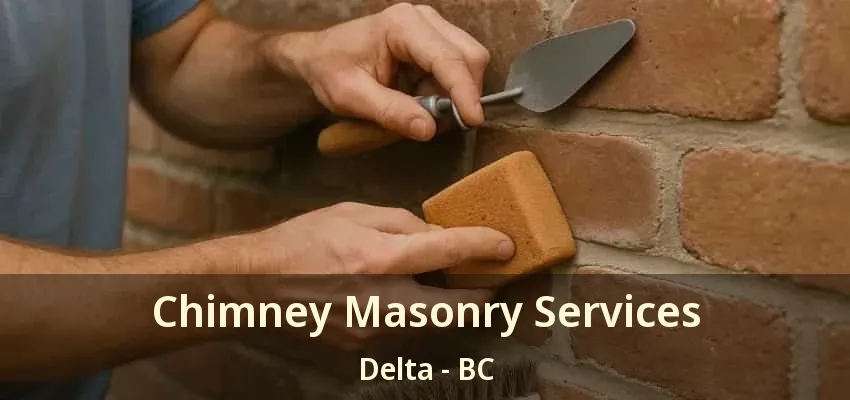
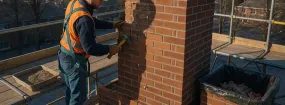
Tuckpointing is the repair of worn mortar joints between the bricks of a chimney. The old, crumbling mortar is raked or ground out to an even depth, and fresh mortar is packed into the joints in layers, then shaped so water runs off the face. Strictly speaking, the word once described a decorative technique using two mortar colors, but today most people use tuckpointing and repointing to mean the same job. The aim is to seal the joints again so rain cannot soak into the chimney, which keeps the bricks tight and protects the structure for many more years.
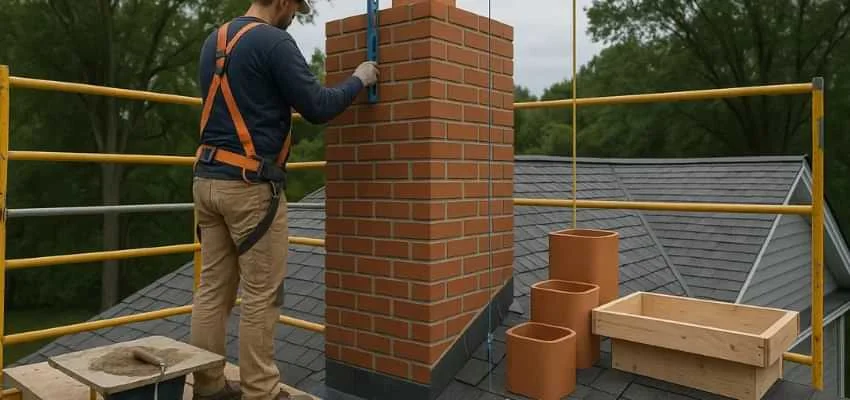
Chimney masonry work covers the brick or stone structure and everything built into it. Typical jobs include replacing damaged bricks, repointing worn mortar joints, rebuilding or sealing the crown, rebuilding the top of the chimney above the roof, repairing the firebox walls and resetting loose stone. It often includes small related tasks too, such as resetting counter flashing into fresh joints. Liners, caps and dampers are usually separate items, though many companies handle all of them. When you request quotes for “chimney masonry services”, ask each company to list which of these tasks it is pricing, so you can compare like with like.
It depends on how deep the damage goes, not on how bad the surface looks. Spalled faces and eroded joints on an otherwise solid chimney are a repair job: fresh mortar, a few replacement bricks and attention to wherever the water is getting in. When the top courses rock under light pressure, when cracks run through bricks rather than just mortar, or when the stack has started to lean, patching only delays the inevitable. In those cases we take the chimney down to a sound course and rebuild upward. You should always see the evidence, ideally in photos, before agreeing to a rebuild.
A chimney needs tuckpointing when its mortar joints are cracked, recessed or crumbling. Look for joints that sit noticeably deeper than the brick face, sandy mortar that could be scratched out with a key, hairline cracks running along the joints and dark voids where mortar has fallen out. Grit collecting on the roof or in the gutter below the chimney is another clue. Binoculars from the ground or a photo taken from a safe window give you a good view without climbing. If more than a few scattered joints look this way, repointing is usually due.
Tuckpointing is done joint by joint, and we start by testing a few to see how deep the damage goes and what mortar the chimney was built with. Older chimneys often have softer, lime-rich mortar, and a much harder modern mix next to it can crack the bricks over time. After grinding failed joints back to sound material and rinsing out the dust, we pack new mortar in thin lifts and strike it to match the existing joint profile. For color, we compare dried samples against the old joints rather than guessing. The chimney is kept out of hard rain while the new mortar sets.
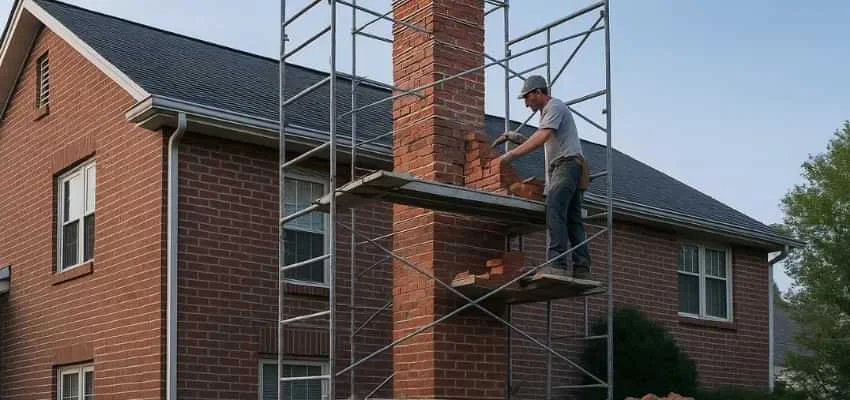
We run repairs in a set order: confirm, protect, fix, test, explain. Confirming means checking the chimney ourselves rather than relying only on the phone description, because the cause of a leak or a stuck part is not always where it seems. Protecting covers drop cloths inside and care around shrubs and shingles outside. The repair itself depends on the part involved. Testing might mean running water over new flashing, cycling a damper several times or checking draft with a little smoke. We finish by walking you through what we did and showing photos of areas you cannot see from the ground.
Repointing is not a recurring yearly job; a properly matched and packed joint can last a generation. When we see fresh tuckpointing fail within a few years, it is usually for one of three reasons: the new mortar was too hard or too soft for the brick, it was smeared over old mortar instead of packed into cleaned-out joints, or water from a cracked crown kept soaking the stack. We address all three on our jobs. After that, the chimney top and the weather-facing side are the spots to watch, and touching up a handful of joints there keeps the rest sound.
It can be a sensible finishing step once the new mortar has cured. A breathable, vapor-permeable repellent made for masonry slows rain absorption while still letting moisture inside the brick escape. Avoid paint, film-forming sealers and products not meant for chimneys, because trapped moisture can make bricks spall. Repellents do not replace a sound crown, cap or flashing, and they wear off over time, so they are reapplied every few years. If you are considering one after “chimney masonry services” work, ask how long to wait before application and which type of product the company uses.
A few direct questions reveal a lot about a chimney repair contractor:
Clear, specific answers are a good sign. If the replies stay vague or the price changes without explanation, it is reasonable to get another opinion before agreeing to the work.
No jargon, no surprise add-ons and no long sales pitch. We explain what the work on your chimney involves, what it costs and how long it takes, then you decide. Call (778) 403-2904 to talk it over with Chimney Sweep Delta.
Clearer draft, cleaner flue: Chimney Cleaning for Delta homes
Enjoy the fire after Chimney Sweep in Delta
Complete Chimney Sweep Services for Delta homeowners
Wood units, stoves and inserts: Fireplace Experts serving Delta
Fireplace smell at startup? Gas Fireplace Cleaning in Delta
Burner ports, pilot hood, glass: Gas Fireplace Maintenance around Delta