A few quick answers help us understand your home, so we can give you a clear, upfront quote for Chimney Inspection Services Delta
The first cool evening of the season is when many people remember the chimney and start wondering what state it is in. If you searched for “chimney inspection services”, you probably want clear facts before anyone climbs onto the roof. This page answers the questions owners around Delta ask most often about chimney inspection, in plain language and without scare tactics. Read the parts that match your situation, skip the rest and come away knowing what is normal, what deserves a closer look and what can safely wait.
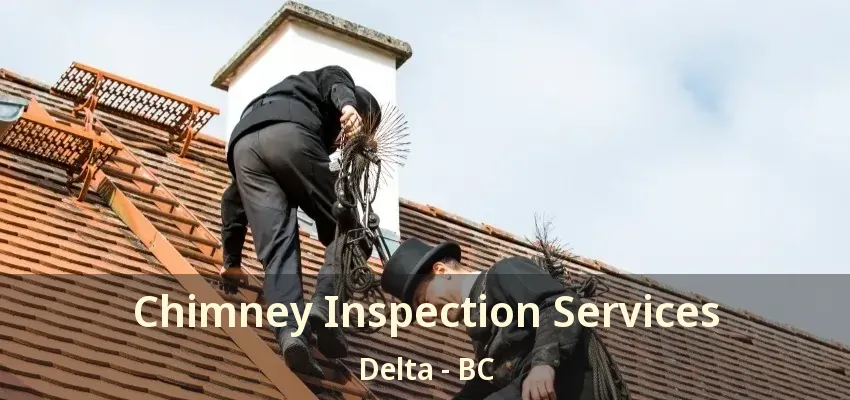
Creosote is the residue that forms when wood smoke cools on its way up the chimney and its tars, gases and moisture condense on the flue walls, and it is dangerous because it burns easily and very hot. A thick layer can catch from a stray spark or an unusually hot fire, and the resulting chimney fire can crack liners and push heat toward nearby framing. Creosote builds faster with damp wood, smoldering fires and chimneys on cold outside walls. It may look like black flakes, a sticky tar or a hard, shiny glaze. If you see any of these on the damper or around the firebox, book a sweep.
Soot is dry carbon and creosote is a tar-based wood smoke residue, and telling them apart helps us work out what is going on with the appliance. Soot wipes off on a fingertip and falls easily under a brush. When we find heavy soot in a flue serving a gas furnace, boiler or fireplace, we take it as a sign the burner may need attention from a qualified gas technician. Creosote, by contrast, tells us how the wood fires have been run: flaky deposits suggest reasonably hot burning, while sticky or glassy layers point to cool, smoky fires or firewood that was not dry enough.
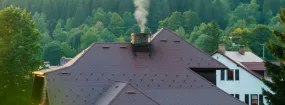
Signs of a chimney fire include a loud roaring or popping sound, dense smoke, a strong hot smell and sparks or flames from the top of the chimney, but many chimney fires burn quietly and are only discovered later. Afterward you might notice puffy, honeycomb-like flakes of creosote on the roof or ground, a warped damper or cap, cracked flue tiles or discolored metal. If you think a fire is happening, get everyone outside and call the fire department. If you suspect one happened in the past, stop using the fireplace or stove until the chimney has been inspected.
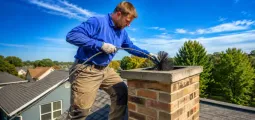
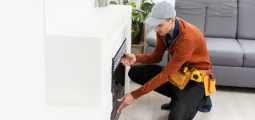
During a chimney inspection, a technician examines the whole system for damage, buildup and safe operation, then explains what was found. Expect questions first: what you burn, how often and whether you have noticed smoke, smells or leaks. Most of the visit happens at the hearth and on the roof, with a camera sent up the flue to show the parts nobody can see from below. If a deeper inspection was booked, the technician may also ask to look in the attic, crawlspace or basement next to the chimney. You should finish with a clear verdict on whether the fireplace or stove is ready to use, plus photos of any problems.
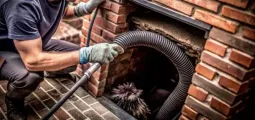
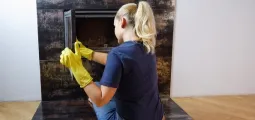
On our visits the flue, smoke chamber, damper and firebox all get cleaned, working along the path of the smoke from the hearth up to the cap. We protect the floor and nearby furniture, seal the opening around our vacuum hose so dust stays contained, then work the flue with rods and a brush matched to the liner: stiff wire for clay tile, softer poly for stainless steel. The smoke chamber above the damper gets hand tools, because creosote clings to its sloped walls. Before and after, we look at the flue condition, often with a camera. At Chimney Sweep Delta, the visit ends with a short walkthrough of what came out, how heavy it was and anything we would keep an eye on.
About an hour covers a typical single flue; when a visit runs longer, the chimney is almost always the reason. Laying drop cloths, setting up the vacuum, sweeping, cleaning the smoke chamber and packing up form the core. A wood stove or insert adds time because pipes and baffles come apart. Steep or slippery roofs slow everything down, since roof safety is not something we rush. Heavy creosote or a camera inspection add more. When we book, a few questions about the appliance and the roof let us give you an arrival time and an honest estimate of how long we will need.
The depth of the inspection is the biggest factor. A visual check of a single, easy-to-reach flue is relatively quick, while a camera scan of several flues, plus a look at attic and crawlspace areas, takes longer and usually costs more. Roof height and pitch, the number of appliances, whether an insert must be pulled for access and whether you need a formal written report all play a part. Before booking “chimney inspection services”, explain why you want the inspection, such as a home purchase, a new stove or a smell, so the company can match the visit to the purpose.
Someone usually needs to be home during a chimney visit, because most of the work starts at the fireplace or stove inside. An adult who can let the technician in, show where the appliances are and answer a few questions is enough. Try to be around at the end too, when the findings are explained and you can ask about anything that was noted. Roof-only tasks, such as checking a cap, can sometimes be done while you are out, but agree on that in advance. Landlords can arrange for a tenant or property manager to be present instead.
Yes, and most buyers and sellers want exactly that. A report prepared for a sale usually includes photos or video stills from inside the flue, a description of each component and a plain summary of what needs attention and how urgently. Ask whether the company can deliver it by email in time for your deadline and whether it will answer follow-up questions from the other party. If you are comparing “chimney inspection services” for a purchase, check that the inspection covers every flue and appliance, including any furnace or water heater flue sharing the same chimney.
From townhouses to detached homes, we see a wide range of setups around Delta and plan each visit around the home in front of us. If it is time to have your chimney looked at, get in touch with Chimney Sweep Delta and we will arrange a time that suits you.
Clearer draft, cleaner flue: Chimney Cleaning for Delta homes
Enjoy the fire after Chimney Sweep in Delta
Complete Chimney Sweep Services for Delta homeowners
Wood units, stoves and inserts: Fireplace Experts serving Delta
Fireplace smell at startup? Gas Fireplace Cleaning in Delta
Burner ports, pilot hood, glass: Gas Fireplace Maintenance around Delta