A few quick answers help us understand your home, so we can give you a clear, upfront quote for Chimney Damper Services Delta
Maybe you spotted a stain on the ceiling beside the fireplace, a few brick chips on the roof or a damper that will not budge. Small discoveries like these send many homeowners in Delta looking up “chimney damper services” to find out how serious the problem really is. The answers below explain how chimney damper repair works, what tends to cause the damage in the first place and which details matter when you talk to a company about fixing it.
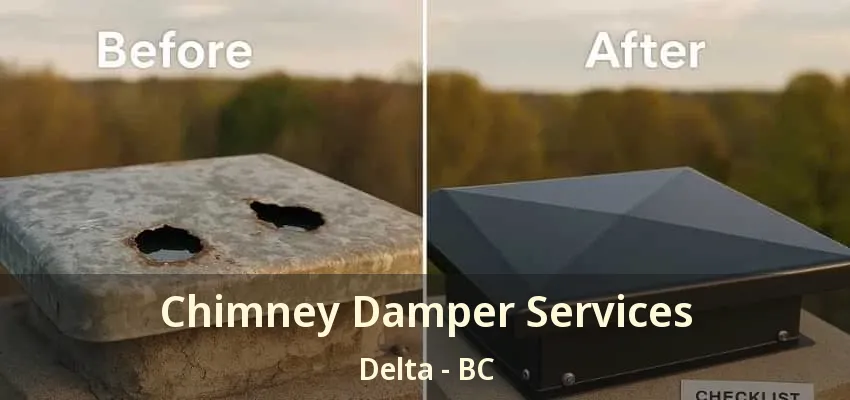
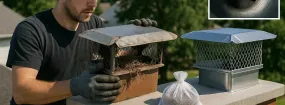
A damper is simply a door in the flue, and the two designs we work on differ mainly in where that door lives. Throat dampers sit low, right above the fire, so they take a lot of heat and tend to warp or rust over time, especially if rain gets down the flue. Top-sealing dampers sit at the chimney top, close firmly on a rubber or silicone seal and are often fitted as a replacement when an old throat damper no longer closes. One caution: a fireplace with gas logs may have its damper clamped open on purpose, and that clamp should stay exactly where it is.
Repairs matter because chimneys tend to fail slowly at first and then expensively. We regularly open up a chimney where a minor issue, such as a missing cap or one cracked mortar joint, was left alone for a few seasons. By then, water has soaked the bricks, rusted the damper or softened the wood framing beside the stack. Work at that stage takes longer and uses far more material. Catching the same fault early usually means a short visit and a modest bill. There is a safety side too, because a damaged flue or liner can let heat and smoke escape where nobody expects them.
A stuck damper is usually rusted, warped or glued in place by creosote, and a light up the flue shows which. Heavy rust tells us water has been getting in from above, usually through a missing cap. A plate sitting crooked in its frame points to heat warping or a broken pivot. Creosote glazing around the edges can lock a damper in position. Sometimes the problem is simply a broken handle or a frayed cable on a top-sealing model. Depending on the cause, we free and adjust it, replace the worn parts or fit a new damper, and we look for the water source at the same time.
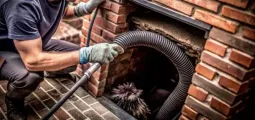
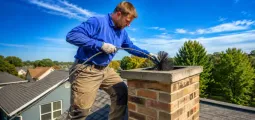
We run repairs in a set order: confirm, protect, fix, test, explain. Confirming means checking the chimney ourselves rather than relying only on the phone description, because the cause of a leak or a stuck part is not always where it seems. Protecting covers drop cloths inside and care around shrubs and shingles outside. The repair itself depends on the part involved. Testing might mean running water over new flashing, cycling a damper several times or checking draft with a little smoke. We finish by walking you through what we did and showing photos of areas you cannot see from the ground.
Yes, top-sealing dampers are commonly retrofitted on masonry chimneys. The unit mounts on top of the flue tile, often with a cap built in, and a stainless cable runs down to a handle fastened inside the firebox. The old throat damper is usually left open or removed if it is broken. The flue tile must be in good condition and the right size for the damper to seal well. Fireplaces with gas logs need special care, since the damper may have to stay partly open by design. When you compare quotes for “chimney damper services”, ask how the cable will be routed and secured.
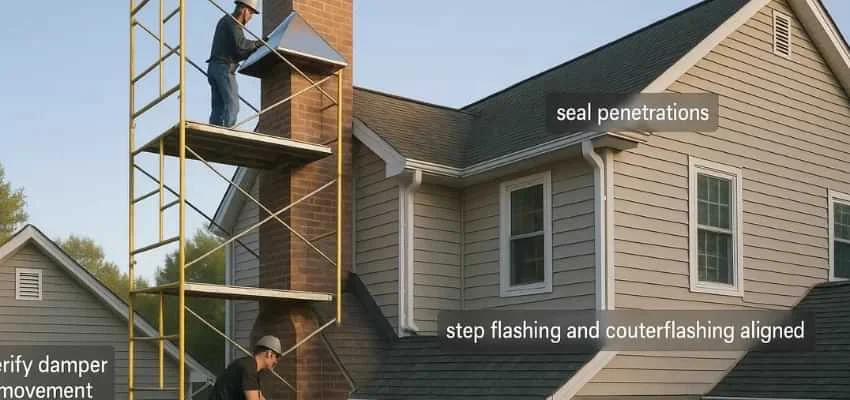
We suggest once a year for most chimneys, with extra visits after anything unusual. A yearly look from the roof and up the flue shows us how earlier repairs are holding and whether anything new has appeared. Events that justify an extra check include a strong windstorm, hail, a lightning strike nearby, a roofer working around the chimney and any time an appliance is added or swapped. A chimney you never use is not exempt; some of the worst weather damage we find is on chimneys nobody has looked at in years, simply because no one noticed the warning signs inside.
Labor, access and materials drive the price, roughly in that order. Labor depends on the size of the repair and whether it can be finished in one visit or needs curing time between stages. Access covers roof height, pitch and anything that makes ladder setup awkward, such as a deck or steep slope below the chimney. Materials range from a tube of sealant to a custom stainless chase cover or a full liner kit. We also leave room in the conversation for surprises, because opening a chimney sometimes reveals more. Our quotes list each part of the work separately, so you can see where the money goes.
Mention what the chimney is made of, what it serves and what you have noticed, because a few details on the phone save a lot of time on the roof. We ask which appliances use the flue, how many stories the house has and how steep the roof is. We ask what you have seen: a stain, debris in the firebox, a stuck handle, a rattling cap, smoke in the room. We ask when it started and whether a roofer or another contractor worked nearby recently. Two quick phone snapshots, one of the chimney top from the yard and one of the problem area inside, often tell us which parts and ladders to bring on the first trip.
Closed, once the fire is completely out and the ashes are cold. A shut damper keeps heated or cooled indoor air from escaping up the chimney and stops drafts and odors from coming down. Never close it while embers are still glowing, because smoke and carbon monoxide need a way out. The main exception is a fireplace with vented gas logs, where the damper is often fixed partly open on purpose and should be left that way. If your damper will not close fully or open reliably, booking chimney damper repair is the sensible next step before the next cold evening.
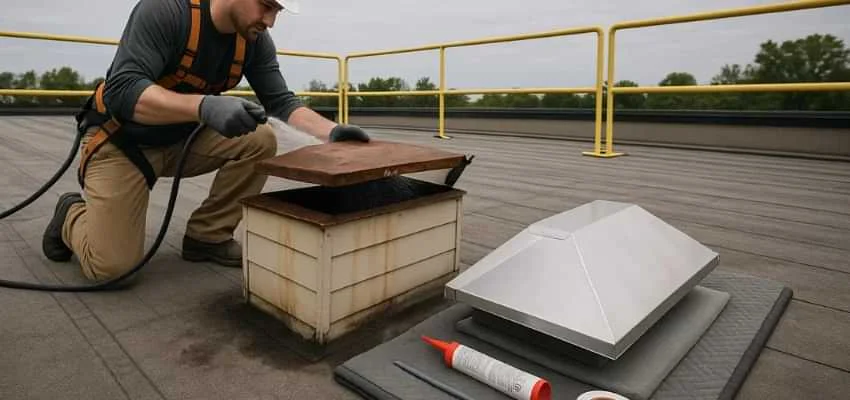
Not every issue makes a noise or a smell before it grows. A routine look at your chimney is the simplest way to find out where things stand. Call (778) 403-2904 and book chimney damper repair with the Chimney Sweep Delta team.
Clearer draft, cleaner flue: Chimney Cleaning for Delta homes
Enjoy the fire after Chimney Sweep in Delta
Complete Chimney Sweep Services for Delta homeowners
Wood units, stoves and inserts: Fireplace Experts serving Delta
Fireplace smell at startup? Gas Fireplace Cleaning in Delta
Burner ports, pilot hood, glass: Gas Fireplace Maintenance around Delta